
You Can Step Outside the System, But Your Assets Can’t
I meet a lot of people who have spent years trying to step outside the system.
They’ve studied natural law. They’ve explored sovereignty. They’ve set up trusts, corrected status, joined associations, drafted documents, reclaimed land, and questioned everything we’re told about ownership and authority.
These are not lazy people. Quite the opposite. They are thoughtful, principled, deeply motivated, and often exhausted.
What troubles me is not their philosophy. In many cases, I share it.
What troubles me is how much time, money, and emotional energy people are pouring into processes that simply won’t do what they hope they will, especially when the real goal is to protect their children.
Ownership Is an Idea Before It’s a Right
If we strip everything back far enough, ownership is not a natural fact. It’s an imagined one.
At some point in human history, we decided that we could place a fence around a piece of land, literally or symbolically, and say, “This is mine.” That collective imagination became hierarchy, law, and eventually the legal systems we live under today.
Whether we like it or not, ownership only exists where it is recognised and enforced.
You can declare land private. You can declare yourself sovereign. You can state that something belongs to you under natural or ecclesiastical law.
But the uncomfortable question is always the same:
Who recognises that claim and who enforces it if it’s challenged?
Belief and Enforcement Are Not the Same Thing
This is where many people get stuck.
Something can be philosophically coherent, morally sound, and intellectually consistent, and still offer no protection when it matters.
If a claimant turns up.
If a dispute arises.
If planning enforcement is triggered.
If tax is assessed.
If a death occurs.
If your children are left trying to navigate the aftermath.
At that point, only one system resolves the dispute. Only one system has courts, registries, enforcement officers, and the power to compel outcomes.
We can critique that system, and we should – it is our responsibility as anarchists to hold the line, Chomsky style!, but we cannot wish it away.
You Can Declare Sovereignty, But You Can’t Out-Enforce the State
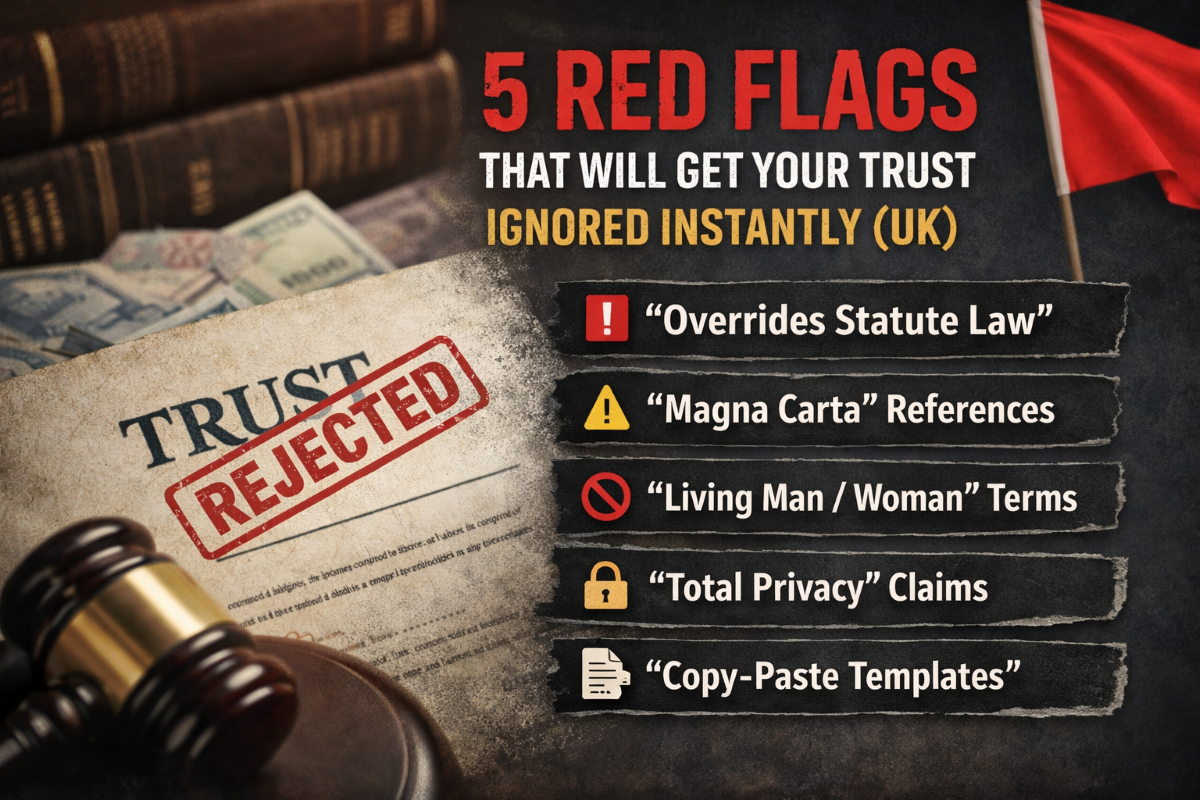
I often hear people say they will reclaim land, correct their status, or remove their name from legal fictions so that the Crown or the courts no longer have authority over them.
I understand the impulse. I’ve been down those rabbit holes myself.
But here is the hard truth:
Unless you have an enforcement mechanism greater than the state’s, greater than its courts, registries, and ultimately its coercive power, your declaration will simply be ignored.
Not argued with. Not debated.
Ignored.
And worse, drawing attention to yourself in the wrong way can actually create more problems, not fewer.
The Question That Matters Most
This is the question I always come back to:
If something happened to you tomorrow, what would actually protect your children?
Not in theory.
Not philosophically.
Not in a perfect world.
But in reality.
What would a bank recognise?
What would the Land Registry recognise?
What would the courts recognise?
What would executors be able to enforce?
Because intentions don’t protect families. Recognised structures do.
Why So Much Effort Ends Up Achieving So Little
I see people with multiple trusts that don’t interact with each other.
Offshore structures they don’t fully control.
Ecclesiastical or private trusts with no clear enforcement route.
Unregistered arrangements.
Conflicting advice from different belief systems.
The result is often confusion rather than protection.
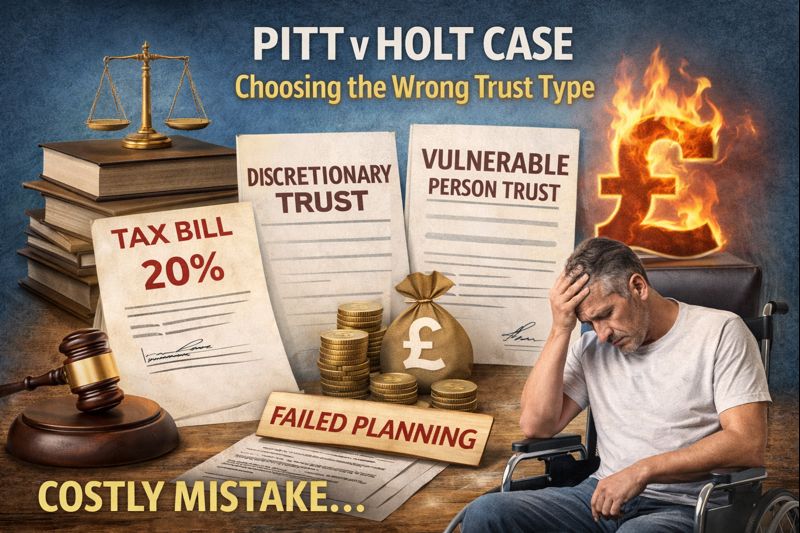
And the tragic irony is this: many of these people already have the beginnings of solid, recognised planning, wills, LPAs, properly structured trusts, but they are distracted by the hope that there is a way to opt out entirely.
There isn’t.
Using the System Isn’t Endorsing It
This is the part that often causes resistance.
Using the legal system to protect your family does not mean you agree with it.
It does not mean you approve of how power operates.
It does not mean you’ve abandoned your principles.
It means you understand where enforcement currently lives.
We are not in a different system yet. We are not post-state. We are not operating under natural law in practice.
This is the system we have.
And if you want your claims to land, property, and assets to survive dispute, death, and challenge, you have to use the mechanisms that are recognised.
Quiet Protection Beats Loud Protest
In my experience, the people who protect their families best are not the ones putting their heads above the parapet.
They work quietly.
They structure properly.
They plan within the system while understanding its flaws.
They don’t antagonise enforcement, they outlast it.
They don’t try to conquer the state.
They make sure their children aren’t crushed by it.
A Final Thought
Most people I meet in these spaces are not trying to avoid responsibility.
They are trying to create safety, continuity, and dignity for the next generation, in a world that feels increasingly unstable and hostile.
My role isn’t to tell you that your philosophy is wrong.
It’s to help you bridge the gap between belief and protection, so that when it really matters, your children aren’t left holding beautiful ideas that no one will enforce.










1 comment